Plus, cocktails get political͏‌ ͏‌ ͏‌ ͏‌ ͏‌ ͏‌ ͏‌ ͏‌ ͏‌ ͏‌ ͏‌ ͏‌ ͏‌ ͏‌ ͏‌ ͏‌ ͏‌ ͏‌ ͏‌ ͏‌ ͏‌ ͏‌ ͏‌ ͏‌ ͏‌ ͏‌ ͏‌ ͏‌ ͏‌ ͏‌ ͏‌ ͏‌ ͏‌ ͏‌ ͏‌ ͏‌ ͏‌ ͏‌ ͏‌ ͏‌ ͏‌ ͏‌ ͏‌ ͏‌ ͏‌ ͏‌ ͏‌ ͏‌ ͏‌ ͏‌ ͏‌ ͏‌ ͏‌ ͏‌ ͏‌ ͏‌ ͏‌ ͏‌ ͏‌ ͏‌ 
 
 
October 03, 2024
Bevnet

in this issue

Welcome to BevNET’s spirits newsletter! This week we’ll be digging into how the port strike could impact spirits suppliers.

What insiders are reading: Check out how RTDs are doing on-premise and my colleague Lukas Southard’s look into how NA retailers keep customers coming back

Thanks for reading.

-BevNET spirits editor, Ferron Salniker


🔥Hot Take

What The Port Strike Means For Spirits

What The Port Strike Means For Spirits

As thousands of dockworkers at East and Gulf Coast ports strike, major trade gateways for goods coming in and out of the U.S. are cut off – and that includes spirits. 

Last year, 77% of U.S. distilled spirits exports and 43% of distilled spirits imports passed through the ports that are impacted by the strike, according to the Distilled Spirits Council of the U.S. (DISCUS). So what does that mean for the industry? Possibly bottlenecked supply chains, delayed product deliveries, product shortages, and bumped up shipping costs. 

For now, it’s a wait and see game. In terms of delays, it will take approximately one week for beverage alcohol importers to recover from a one-day strike, or four to six weeks to recover from a one-week strike, and get operations “back to normal,” according to Serena Campbell, operations director for USA Wine West, a company of bev-alc importer and distributor MHW.

While steamship lines start to make bigger decisions around routing and diversions, expect congestion on the West Coast to ramp up quickly, and it's unclear how much time can be gained by taking this route compared to just waiting out the strike on the other side of the country. Once ports reopen, companies should expect delays retrieving containers.

As for financial strain, in the next several weeks, on top of peak-season surcharges already in place, emergency strike surcharges will be implemented. 

“We could see at least a 30% to 40% increase in shipping costs – possibly more, as steamship lines may adjust the surcharge amounts as the situation evolves,” said Campbell.

Bringing merchandise into the U.S. through the West Coast brings additional costs with uncertain results, and air cargo rates are prohibitively expensive, she added. 

The potential delay of shipping out precious cargo could also be a blow to spirits exports just as they continue to rebuild after plummeting from the retaliatory tariffs on American Whiskey imposed from 2018 to 2021 by the EU and U.K. as part of the steel-aluminum trade dispute. U.S. spirits producers have been recapturing lost market share in their largest export markets, but DISCUS warned that the delays could be harmful for holiday sales. Some distillers may have already gotten shipments under the wire. Sonat Birnecker Hart, president and founder of Koval Distillery in Chicago said they luckily shipped everything for the holidays already. 

We’ll have more on the site today including how spirits suppliers can prepare. Are you affected by the port closures? Email me.


📇RECENT HEADLINES

null
 

🕶️New Era For Whiskey Innovator Compass Box

One of the most innovative companies in Scotch is making the biggest change since its foundation in 2000. Launched by John Glaser— that industry operator and disrupter known for getting in trouble with the Scotch Whisky Association— Compass Box is now tightening its core lineup, reducing its prices and dialing up its brand. We chatted with the CEO about the big moves.


📃Subpoena Issued for Documents in Dietary Guidelines Research

More transparency may be coming to the process by which federal government agencies are examining the inclusion of alcohol in the Dietary Guidelines for Americans (DGA). The U.S. House of Representatives Committee on Oversight and Accountability subpoenaed documents on Tuesday from U.S. Department of Health and Human Services (HHS) secretary Xavier Becerra and U.S. Department of Agriculture (USDA) secretary Tom Vilsack. Both agencies collaborate every five years on the Dietary Guidelines Advisory Committee (DGAC). In recent months, beverage-alcohol trade groups have circled their wagons in opposition to the DGAC’s diversion from its usual process concerning alcohol consumption guidelines, you can learn more from Brewbound's ongoing coverage.  
 

💸Diageo, LVMH Bet On NA

Yesterday Moët Hennessy popped bottles of non-alcoholic wine as it announced a minority investment in premium sparkling alcohol-removed wine French Bloom. The luxury NA wine sells three varieties available in the U.S. including a $119 bottle of Vintage 2022 Cuvée. The news follows Diageo’s purchase of leading non-alc spirit Ritual Zero Proof. All this is interesting context for our conversation with an adult non-alc distributor who is finding the balance between positioning non-alc products as craft and meeting beverage managers’ expectations to keep prices low.


🇺🇸CGA: D.C. No. 1 Cocktail Consumption City

Talk about stress drinking: Washington, D.C. just topped Nevada for the number one U.S. location for cocktail consumption. With the election looming, we can’t say we’re surprised that cocktails in the capital are outperforming 2023 levels across times and days of the week, with the biggest increases recorded on hump day and mid-afternoons. We’re curious about how much of that spike can be attributed to coconut cocktails. Get more on-prem insights.


📖 WHAT WE'RE READING

🤪They Made a “Sports Bar for Politics.” It Went About How You’d Expect

Speaking of D.C., here’s the tale of how one “bipartisan” sports bar went predictably bad. There’s more that went wrong here, but as Martha Stewart learned in 2013, lighting is everything.


💅🏽Premiumization Is Slowing – But There’s a Counter-Trend

They’re up, they’re down— the premiumization tracker is one we are trying to keep up with. While the overall trend is slowing (which may make some major players start pushing cheaper booze again), the IWSR has found that an emerging group of middle-income legal drinking age consumers who skew younger and increasingly female are the ones pushing the super premium spending forward. Once again, I’m a statistic!


🙊LOL

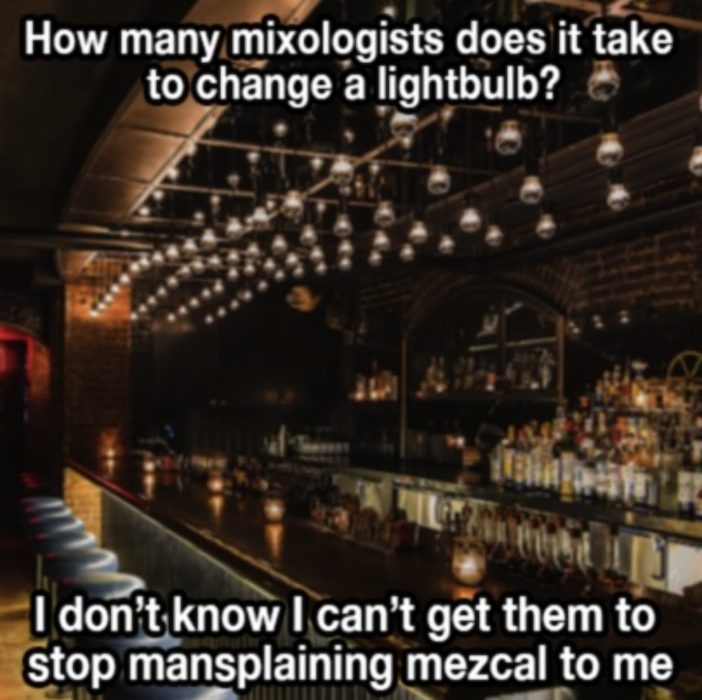
We call it a mezplain.
null
Credit: @moverandshakerco

Your BevNET CPG Media Subscriptions

You're currently subscribed to newsletters from BevNET CPG Media. To change which newsletters you receive, update your preferences - don't miss out on topics you care about.

Bevnet
FacebookInstagramLinkedInX (Twitter)

BevNET.com, Inc • 65 Chapel Street, Newton, MA 02458

You are receiving this email because you subscribed at our website at https://www.bevnet.com

Bevnet is a part of BevNET CPG Media. All rights reserved (Terms & Privacy Policy) © 1996 - 2026.