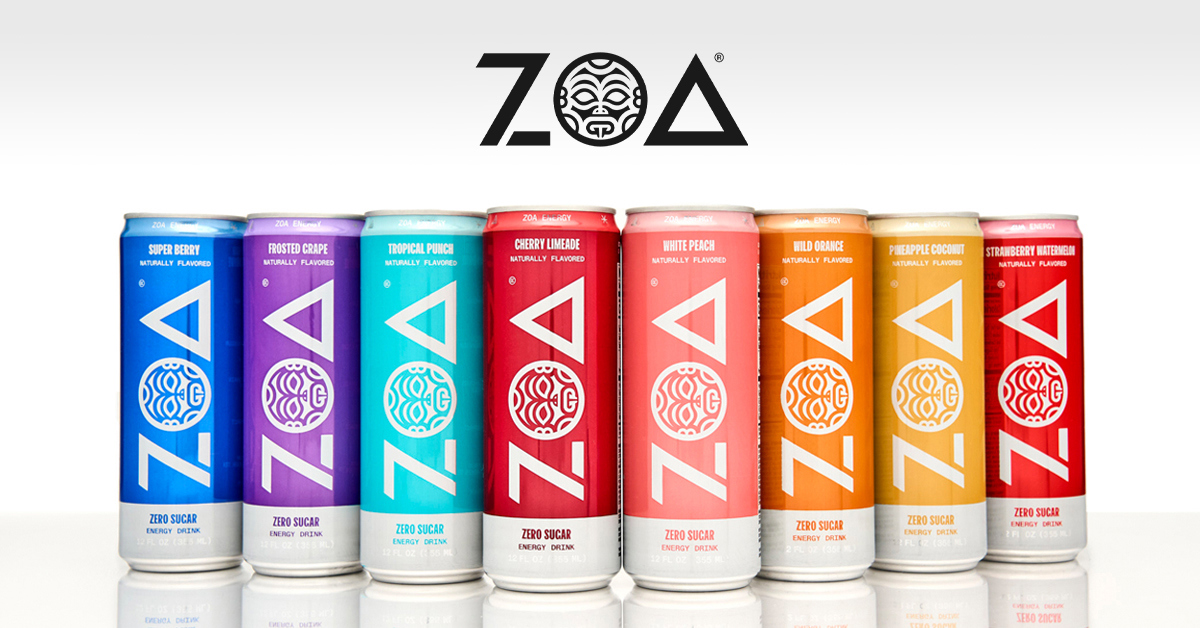
Dwayne “The Rock” Johnson’s ZOA has fallen behind energy drink category competition, but that hasn’t shaken the faith of Molson Coors Beverage Company. In fact, the beverage giant, upped its stake in the brand last fall and still sees it as a key pillar to its non-alcoholic Beyond Beer strategy. Although retail sales fell -37.1% in 2023 (according to Circana), the first quarter-and-a-half of 2024 has given us a sense of what a renewed focus on the brand looks like. Speaking at The Beverage Forum 2024 in California earlier this month, Molson Coors president and CEO Gavin Hattersley admitted to a number of missteps ZOA made out the gate, from launching in the wrong pack size (16 oz. cans versus the current 12 oz. offerings) to breaking the golden rule of brand building by scaling too quickly. The company is keeping those learnings close as it expands in convenience and large format retailers this year. It is also bringing out its most powerful marketing weapon via the “Big Dwayne Energy” ad campaign, launched in February, which prominently features Johnson. Last month ZOA also debuted two new exclusive 7-Eleven flavors and unveiled a range of new distribution gains. However, ZOA faces a very different energy landscape today than from when it launched three years ago. Celsius is now number three, more strategics have made bets (Think: KDP and C4, AB InBev and Ghost), and younger brands are already disrupting the set. PRIME, boasting its own powerhouse influencer/co-founder in Logan Paul, has taken over coolers with both hydration and energy plays, while brands like Ghost and C4 have differentiated with licensed candy-flavors that have wide sweet-tooth appeal. If Molson is confident in ZOA’s position, that’s all the better for its prospects going forward, but execution is critical. Beverage and supplements industry consultant Joshua Schall told us that he believes the company could benefit from being more deliberate in how they deploy the superstar face of the brand. “You have Dwayne ‘The Rock’ Johnson weaved into the brand DNA, yet it feels more like he's acted in a diverse set of movie roles as the look/feel/tone of ZOA has changed in the first few years,” Schall said. “In a beverage category where brand authenticity matters a lot, ZOA can't just be another ‘ad’ for its superstar co-founder.” ZOA has grown in the functional drinks and powdered supplements set via its ZOA+ line, but Schall suggested Molson could also benefit from diversifying its non-alc portfolio beyond the brand. He noted that more M&A for its Beyond Beer department “would also be helpful to ZOA, as it will help signal the importance internally.” On that last point, Hattersley may already be thinking on the same level as Schall, at least in agreeing that Molson needs to grow its NA roster through some means (although L.A. Libations, itself a Molson Coors investment, is also expected to shoulder some of that burden). He told investors during the company’s Q1 earnings call last month: “I certainly believe that we need to have more than just ZOA in the non-alc space, and certainly, that can come from internal development as opposed to [buying].” It’s easier said than done. Molson has already ended a distribution relationship with coffee brand La Colombe – now in a strategic partnership with KDP – and its other NA partnerships are relatively small, namely barley milk brand Golden Wing and several 0.0 beers. At the same time, the wind is in Molson’s sails – it had a terrific quarter and has shown real growth. Whether or not that will blossom into total beverage growth lies buried under The Rock. Go Deeper: Learn more about the relationship between ZOA and Molson Coors. |