Plus, LikeAir drops LTOs via TikTok͏‌ ͏‌ ͏‌ ͏‌ ͏‌ ͏‌ ͏‌ ͏‌ ͏‌ ͏‌ ͏‌ ͏‌ ͏‌ ͏‌ ͏‌ ͏‌ ͏‌ ͏‌ ͏‌ ͏‌ ͏‌ ͏‌ ͏‌ ͏‌ ͏‌ ͏‌ ͏‌ ͏‌ ͏‌ ͏‌ ͏‌ ͏‌ ͏‌ ͏‌ ͏‌ ͏‌ ͏‌ ͏‌ ͏‌ ͏‌ ͏‌ ͏‌ ͏‌ ͏‌ ͏‌ ͏‌ ͏‌ ͏‌ ͏‌ ͏‌ ͏‌ ͏‌ ͏‌ ͏‌ ͏‌ ͏‌ ͏‌ ͏‌ ͏‌ ͏‌ 
 
 
NoshSeptember 19, 2024
DAILY BRIEFING
Today's news & insights for the food industry.

In this issue of Daily Briefing

  • 😮‍💨 Like Air Drops Flavors On TikTok
  • ⚠️ How Food Warning Labels Could Look
  • 🇲🇽 Manna Tree and Grupo Herdez Unite
  • 📰 Roundup: Delistings, Acquisitions, Closures
  • 🤝 Co-Brands, Sugary Licensing Deals & Cannabis-Infused Fitness Drinks

📰 Today's Top Story

👀 General Mills Looks For ‘Bolt-On’ Growth

👀 General Mills Looks For ‘Bolt-On’ Growth

After announcing the sale of its North American yogurt business last week, General Mills is focusing on bolt-on acquisitions of “smaller size assets” to improve growth, said chairman and CEO Jeff Harmening in this week’s Q1 earnings report.

“We’ll continue to look for options to strengthen our growth profile through M&A, with our near-term focus on bolt-on acquisitions, with the most likely transaction size ranging up to $1 billion to $2 billion,” Harmening said, adding that if the company doesn’t see attractive acquisition candidates, it will return excess cash to shareholders in the form of share repurchases.

This shift in focus follows another quarterly sales slump for the Cheerios and Chex Mix maker. In Q1, net sales dropped 1% to $4.8 billion, driven by unfavorable net price realization and mix. 

General Mills’ North America retail segment saw net sales fall 2% to $3 billion due to lower pound volume. Net sales were down mid-single digits for the U.S. Snacks operation – which includes brands like Nature Valley, Dunkaroos, and Gushers – and down low-single digits for its U.S. Morning Food division. However, according to CFO Kofi Bruce, the CPG giant improved or maintained its market share in six of its top 10 U.S. categories versus fiscal 2024. 

First-quarter net sales for the North America Foodservice division were flat at $536 million. Performance was led by growth in breads, snacks, biscuits and baking mixes in away-from-home channels where consumer traffic has been growing, such as K-12 schools and colleges and universities. The growth was offset by declines in bakery flour and pizza crust.

Unlike past quarters, cost savings didn’t offer much of a bright spot in the quarterly report. In Q1, gross margin was down 130 basis points to 34.8%, fueled by input cost inflation, unfavorable mark-to-market effects and unfavorable net price realization and mix, only partially offset by HMM cost savings.

Looking ahead, General Mills plans to strengthen its competitiveness by delivering “remarkable experiences” to consumers across its leading food brands. In fiscal 2025, the company expects organic net sales to be between flat and 1%, adjusted operating profit to be between -2% and flat, and adjusted diluted EPS to be between -1% and +1% in constant currency. 

As we look at the rest of the year, I wouldn’t say that our guidance is predicated on our categories’ continued improvement. What it’s predicated on is our continued improvement in competitiveness,” Harmening told investors during yesterday’s call. 

Insiders can learn more about General Mills’ quarterly results and its plans for growth in fiscal 2025 by reading the full earnings recap on Nosh.


✨ What You Need to Know ✨

😮‍💨 Like Air Drops Flavors On TikTok

😮‍💨 Like Air Drops Flavors On TikTok

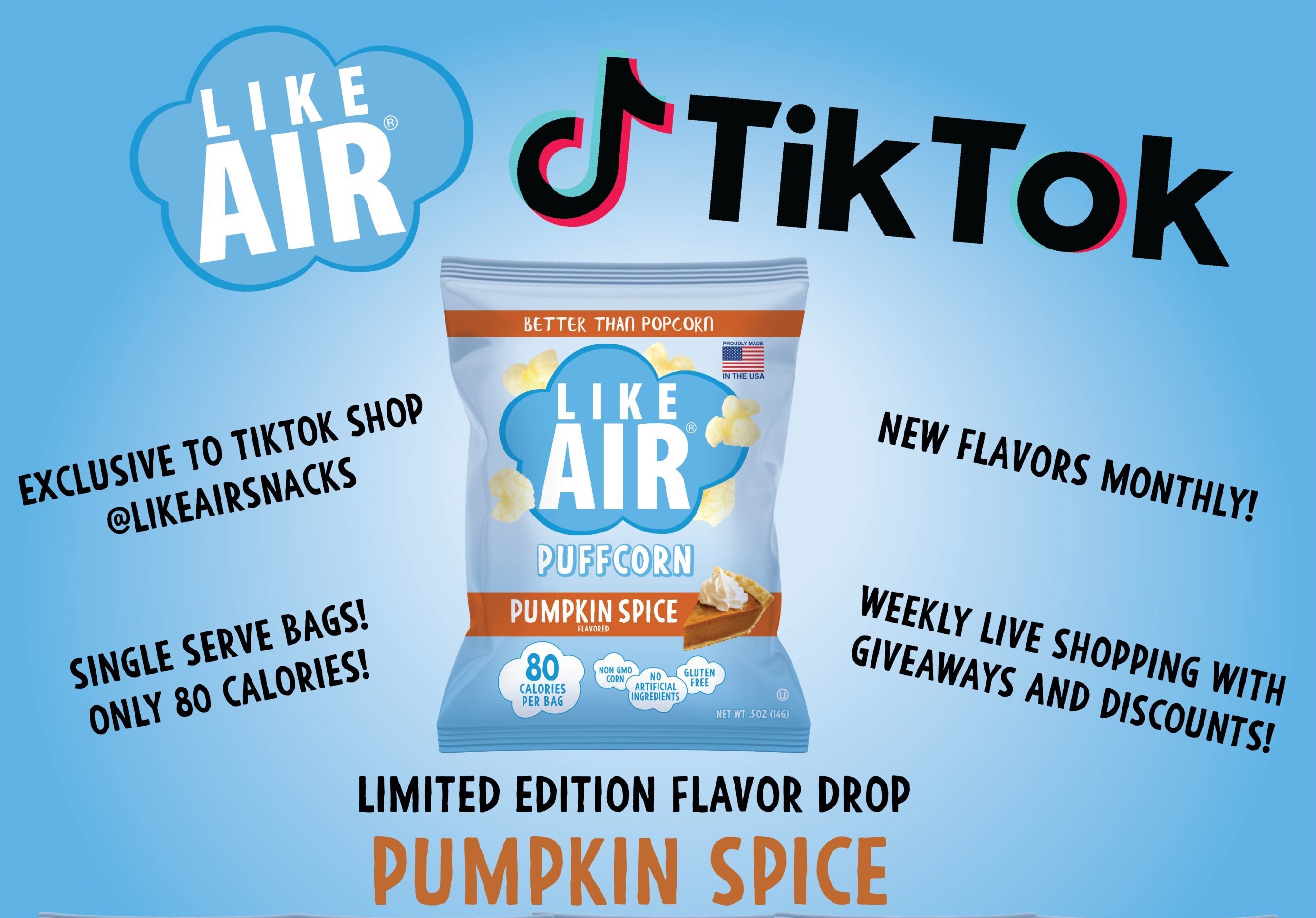
Snack brand Like Air announced today it will be launching a monthly flavor drop program on TikTok Shop, releasing limited-edition varieties of its puffed corn beginning this week with Pumpkin Spice.

👀 The brand aims to engage with fans on the social media platform to collect ideas for future monthly flavor drops and has even tapped a pair of popular content creators (with 42.2K followers) to join the team as marketing managers.

🗣️ What they said: "Our goal has always been to provide delicious, healthier snack choices, and with new flavors each month, TikTok's engaging and interactive platform helps us connect with even more people looking for tasty, guilt-free snacks."Allison Lin, co-founder of Like Air
 

⚠️ WaPo: What Food Warning Labels Could Look Like

The FDA is set to release its proposal on front-of-pack nutrient-related food labels this fall that it claims have been designed to help Americans make healthy food choices and, in turn, reduce rates of obesity and other diet-related diseases. A recent report in The Washington Post broke down what those labels could look like. 

1️⃣ The labels are fairly simple. Products found to contain more than 20% the recommended daily serving of sugar, saturated fat or sodium would feature a black and white callout, for example “High In Sugar,” on the front of the package. 

2️⃣ The second option would be a uniform, color-forward label that lists Saturated Fat, Sodium and Sugar on every package with each nutrient being accompanied by a colored score box: High (Red), Med (Yellow) or Low (Green). 

⚔️ However, some experts and lawmakers, including Senate health committee chairman Bernie Sanders, are already arguing that the labeling scheme will not be sufficient. Major food companies have also been lobbying against the move, claiming that making widespread packaging updates would lead to high food prices. 


🇲🇽 Manna Tree and Grupo Herdez Unite

Private equity firm Manna Tree has entered a strategic partnership with Mexican food manufacturer Grupo Herdez in a move that is expected to benefit the firm’s CPG portfolio companies through expanded access to distribution and new connections in North America.

  • Manna Tree’s portfolio includes brands such as Health-Ade, Good Culture and Gotham Greens.
  • Grupo Herdez is one of the largest Mexican food producers with “a presence in 99% of Mexican households,” according to the release.

💬 "By aligning with Grupo Herdez's extensive industry expertise and distribution network, including their established U.S. presence, we expect to be able to provide even stronger support and insights to our portfolio companies," said Manna Tree co-founder and managing partner Ross Iverson. "We believe this collaboration also creates an exciting opportunity to explore the dynamic Latin American market, where we're seeing strong growth in the health and wellness-related sector."


📰 News Roundup: Real Good Foods Delisting; Hart House shutters

There’s been an influx of news across the CPG scene this week; here’s a roundup of additional headlines we’ve been watching. 

⛔ The Real Good Food Company announced today it has received a delisting notice from Nasdaq after failing to file periodic financial reports with the SEC in a timely manner, per the market’s listing rules. There is a hearing set for the potential delisting on Oct 4. 

🍝 Platinum Equity has announced its second food industry acquisition this week. The private equity firm has acquired Italian pasta condiments and vegetable preserve producer Polli for an undisclosed amount. The news comes after yesterday’s announcement it has bought Rise Baking Company. 

🍔 Hart House, the plant-based fast food restaurant chain launched by comedian Kevin Hart, has closed all locations just two years after first opening its doors. The chain operated four locations in the Los Angeles area. 


🎙️ Now Streaming: CPG Week

🤝 Co-Brands, Sugary Licensing Deals & Cannabis-Infused Fitness Drinks

🤝 Co-Brands, Sugary Licensing Deals & Cannabis-Infused Fitness Drinks

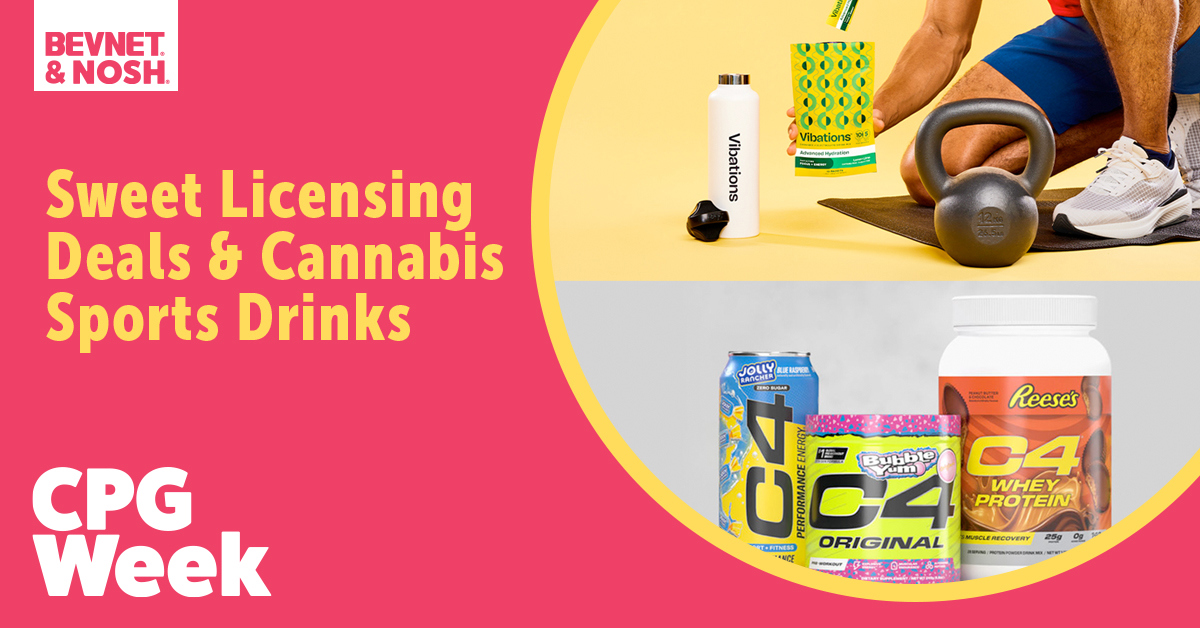
This week, the podcast team talks about the influx of co-branded products, why the energy and performance drink category has such a sweet tooth, and the evolution of cannabis in sports and recovery drinks.

🤝 Whether it’s Oreo-flavored Coke or Coke-flavored Oreos, food and beverage makers are bringing recognizable names together in co-branded opportunities that seem to be working in expanding brands into new territory.

🍬 The team discusses the sugar high happening in performance products exemplified in the recent licensing deal between energy drink brand C4 and Hershey’s.

🪴 Are CBD recovery drinks dead? Not necessarily, but there has been an evolution characterized by a lack of FDA regulation and the rise of low-dose, hemp-derived THC.

Listen to the episode now.

Like what you hear? Please don’t hesitate to rate our show and leave a review on your podcast platform of choice.

BevNET.com, Inc. 65 Chapel Street, Newton, MA 02458
hello@nosh.com

Manage subscription Submit News Advertise

Update Preferences Unsubscribe

facebooktwittertwittertwitteryoutube

©1996 - 2026 BevNET.com®
*|LIST:DESCRIPTION|*