| | | | | | In today’s issue | 🧀 Plonts Launches in NYC With $12M • 🏛️ Perfect Day Co-Man Conflict Heats Up • 🤝 Golden State Foods Changes Ownership • 🚀 CR Finds ‘Concerning Levels’ of Perchlorate • 🥚 Vital Farms ‘Off To A Great Start’ • 💊 FuturHealth Launches GLP-1 Meal Delivery |
| 📰 Today's Top Story | | | For a summer without a whole lot of financial news, the rumored buyout of snacking giant Kellanova by legacy candy maker Mars hit like Hurricane Debby. The potential for a company with an estimated combined revenue of $60 billion, after all, carries a lot of crosswinds.
And while everyone loves a big merger, at the entrepreneurial level, it’s often hard to parse out how it might change the stakes. Especially as corporate VC plays have dropped precipitously, leaving early-stage entrepreneurial brands to work with institutional investors, most of the moving parts in these two players are old and slow: Kellanova is a stable of older, bakery-based warhorses, including Pringles, Cheez-Its, Pop-Tarts and Nutrigrain bars; only RXBAR, purchased (and, many say, fumbled) in 2017, is of recent vintage. Comparatively, privately held Mars – home of M&M’s, Snickers, and lots of other tasty candy – has bought a few smaller brands, but it has largely stuck to the sweet stuff, buying a few PE-backed fast-growth brands, like Nature’s Bakery and Tru Fru, along with its majority stake in the better established KIND. Still, a big deal would certainly have repercussions – the tie-up of Dr Pepper Snapple Group and Keurig Green Mountain in 2018, for example, continues to reverberate from the perspective of partnerships with growth brands – it’s just a matter of time. So what should you watch out for as the owner of one of those brands? We checked with experts around food and beverage to understand some of the things that smaller brands should clock into when the whales start their mating dance. In terms of opportunity: - Distribution may open up, according to Kaumil Gajrawala, a longtime beverage industry analyst with Jefferies. “Let’s say the purchaser wants to put the target company into their distribution,” Gajrawala said. “So for anything lost, there’s a void that needs to be filled.” Example? Look at the Bang deal with PepsiCo, which allowed Celsius to move into the beer distribution network that Bang largely abandoned (and then look at the brands that moved into those same beer distributors when Celsius ultimately moved in to replace Bang at PepsiCo).
- In those places where smaller brands compete with the bigger ones, there’s the potential to take advantage of the fog of integration that tends to accompany these deals for about a year to 18 months, says Tony Rhie, a partner in Alliance Consulting Group, who works with corporate CPG firms on strategy and growth. According to Rhie, it’s a good time to focus on servicing your key accounts with a “small shop, better service,” kind of approach. The two big companies need to combine everything from billing software to procurement – let alone the dreaded “strategic review.” That means there are often tactical opportunities, especially in incubation retail channels like natural and even mainstream grocery: “Even if I was going into Walmart,” Rhie said, “If the company I was with was working with Walmart, I might say, ‘there’s a good opportunity they’re going to lose their eye on the ball - we’re here for that.’”
- Your category may heat up – if the acquired company decision validates it. So for a Kellanova takeover, look at snacks as a potential area where investment might increase down the line. It could be a datapoint for a presentation, if nothing else.
- Don’t underestimate the ability of big companies to screw up their acquisitions. “Sooner or later, they start trying to ‘fix’ things,” which often has negative results, cracks Rifle Hughes, co-founder of Integral CPG, an innovation consulting firm.
- Lean in on your own innovation, and don’t be afraid to present something new, Rhie notes: when companies are combining, innovation budgets often get cut.
Insiders can access the full story to learn what challenges experts say the deal could produce and glean more insights from Gajrawala and additional industry experts. Also check out this week’s episode of CPG Week for some casual conversation about the merger’s potential implications. |
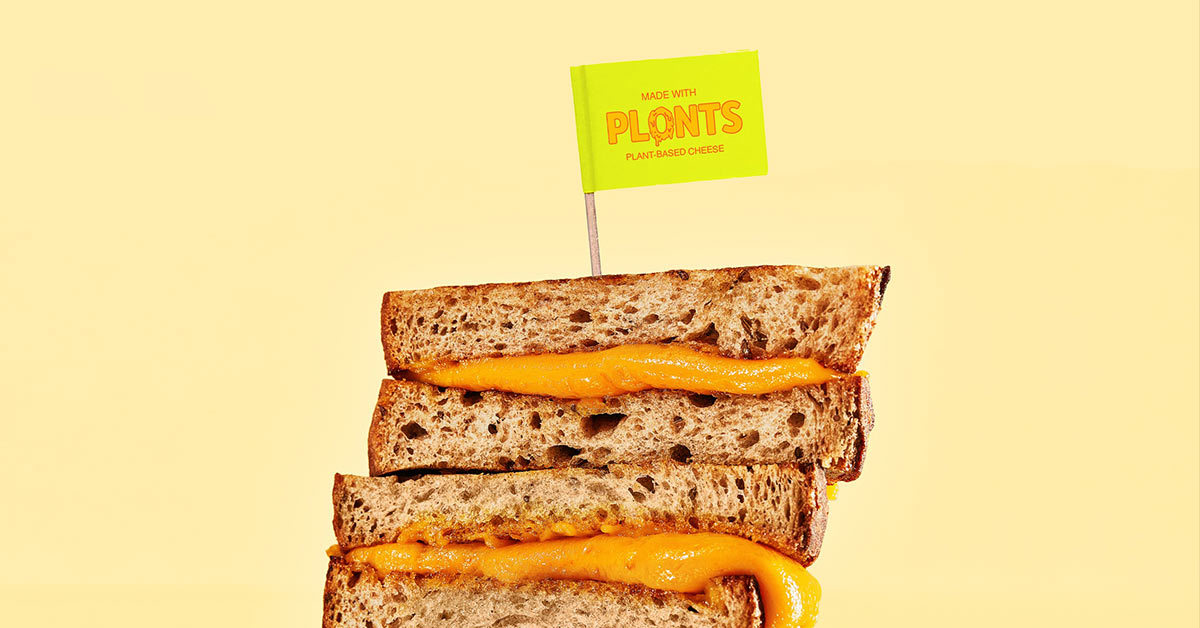
| | ✨ What You Need to Know ✨ | | | Armed with a $12 million seed round led by Lowercarbon Capital, alt-dairy newcomer Plonts is launching its aged soy milk-based cheddar in a slew of New York City and San Francisco restaurants this week.
⏪ Plonts (formerly known as Tezza Foods) was founded in 2019 and is the brainchild of Nathaniel Chu, who began making cheese in his basement at the end of his PhD program studying the gut microbiome. 🧑🔬 During the years-long R&D process, Chu worked to design microbial communities that convert the proteins, fats and carbohydrates of plant-based ingredients into a an end-cheese product via fermentation. 🏭 Plonts produces all of its products in-house at its 10,000 sq. ft. Oakland facility. According to co-CEO Josh Moser, roughly half of the space is dedicated to the company’s manufacturing processes, and he foresees being able to produce everything there “for a while.” Insiders can gain a deeper understanding of Plonts’ unique cheesemaking approach and its plans to scale in full story. |
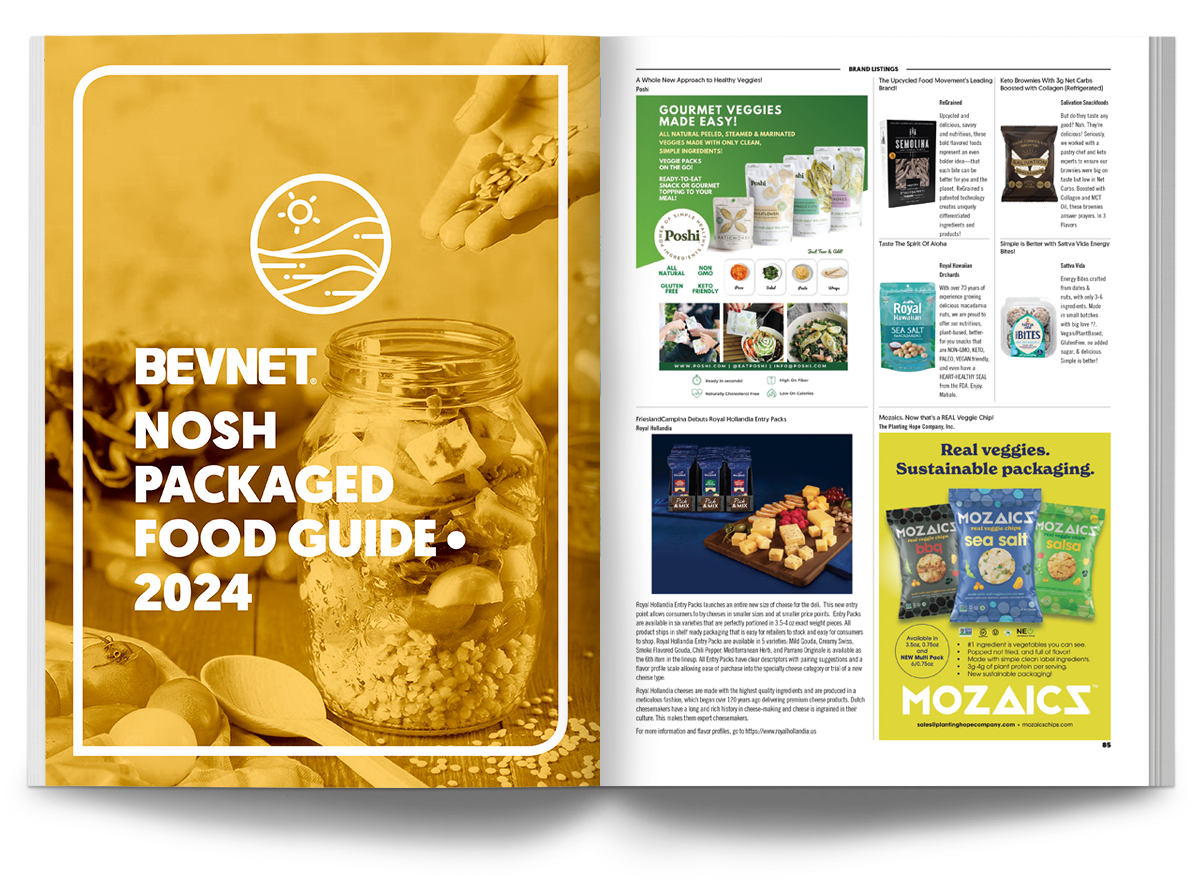
| | | | Boost your brand's visibility by featuring your products, from snacks to ready-to-eat meals, in our Nosh Packaged Food Guide. Reach over 24,000 industry leaders through BevNET Magazine and our digital newsletter.
Secure your spot now, submit details later. Don’t miss out on generating industry buzz and connecting with key decision-makers! |
| | | A lawsuit between animal-free dairy company Perfect Day and its former manufacturing partner, Olon, is growing even more contentious, according to a new report by AgFunder News. The manufacturer claims Perfect Day has left the company with “massive out-of-pocket losses” and was “atrocious” to work with.
🏭 The claims stem from an April suit that alleges Perfect Day stopped paying its bills and secretly planned to break contract and move production of its beta-lactoglobulin (BLG) whey protein ingredient to new plants in India. 🔥 Perfect Day fired back with a countersuit in June that accused Olon of fraud, breach of contract and misappropriation of trade secrets, according to AgFunder. 📝 Olon filed a 101-page response to the suit, alongside a motion to dismiss, this week alleging that the reason for the original dispute was due to Perfect Day running out of funds and being unwilling to uphold its end of the contract. Catch Up Quick: Perfect Day Sued By Co-Man |
| | | | Connect with industry pros and the BevNET team, ask questions, stay updated on events, participate in expert Q&As, and enjoy exclusive giveaways! It’s a great way to network, learn, and stay engaged with the community. Join for free at slack.bevnet.com. |
| | | Family and founder-focused private equity firm Lindsay Goldberg announced today it will acquire a controlling interest in Golden State Foods. The investment gives GSF additional resources and capabilities to pursue growth throughout its global operations which includes manufacturing and distributing food and beverage products to foodservice and retail partners.
👔 The Wetterau family will maintain a significant ownership interest in the company per terms of the deal, and Brian Dick will continue to serve as president and CEO. ⏪ Founded in 1947, GSF’s core businesses includes processing and distribution of liquid products, meat, dairy, condiments and flavoring as well as other beverage products. The company supports approximately 125,000 restaurants across five continents. 💭 “Lindsay Goldberg's relationship-driven business building approach and longstanding experience in the quick and limited service restaurant food supply chain make us uniquely positioned to partner with the Wetterau family and GSF management team,” said Eric Fry and Peter Nurnberg, partners at Lindsay Goldberg, in a statement. |
| | | New tests by Consumer Reports have found a chemical used in rocket fuel, missiles, explosives, air bags and certain plastics, in a variety of fast foods and grocery items.
⛔ CR tested 73 food products and detected “concerning levels” in baby and children’s food (19.4 parts per billion), fruits and vegetables (9.3), fast food (7.7), baked products and grains (6.9), dairy (6.2), meat products (5.3), seafood (2.8) and beverages (0.5). 🚱 Perchlorate can enter the food supply via water that has been polluted by improper perchlorate disposal or plastics that are made with the chemical and used to store food. Additionally, bleach used at food processing plants and water utilities can break down into perchlorate. |
| | | Vital Farms saw “strong performance” in its second quarter, according to an earnings call this morning. President and CEO Russell Diez-Canseco said the company was on-track to hit its goal of $1 billion in revenue by 2027 thanks to scaling its supply chain with a new egg-washing and packing facility in Indiana and growing its capacity under roughly 350 family farms currently in its network. Here are the top-line numbers:
- Net revenue was up 38.5% to $147.4 million, compared to $106.4 million in Q2 2023
- Profits rose by about $20 million compared to the prior-year period
- Gross margin expanded to 39.1%, versus 35.5% in the prior-year period
- Adjusted EBITDA doubled year-over-year to $23.3 million
- Full-year net revenue expectation was raised $15 million to $590 million and adjusted EBITDA of at least $75 million versus the previous outlook of $70 million
William Blair analysts wrote that despite the new forecast being above its consensus estimates, the FY outlook “appears conservative in light of business momentum, recent consumption trends and strong operational execution.” |
| | | Personalized weight-loss company FuturHealth announced a new Custom Meal Plan offering today designed to support GLP-1 drug users as they eventually move off the medication and supports the adoption of “lasting lifestyle changes.”
🧑🍳 The program will provide users with dietician and chef-designed, ready-to-eat meals. The refrigerated meals are prepared by a third-party manufacturer and delivered direct-to-consumer. 🍽️ The menu currently includes Kickin' Chicken Fried Rice, Southwestern Style Scramble, Cheesy Turkey Rotini, Ancient Grain Bowl, and more. FuturHealth currently has over 1 million active users. 🧊 But the company is not alone in its mission to support GLP-1 users: Earlier this year Nestle announced the debut of a frozen food product line designed with this consumer group in mind. Additionally, meal and grocery delivery companies including Daily Harvest and Hungryroot have dedicated GLP-1 offerings for consumers. |
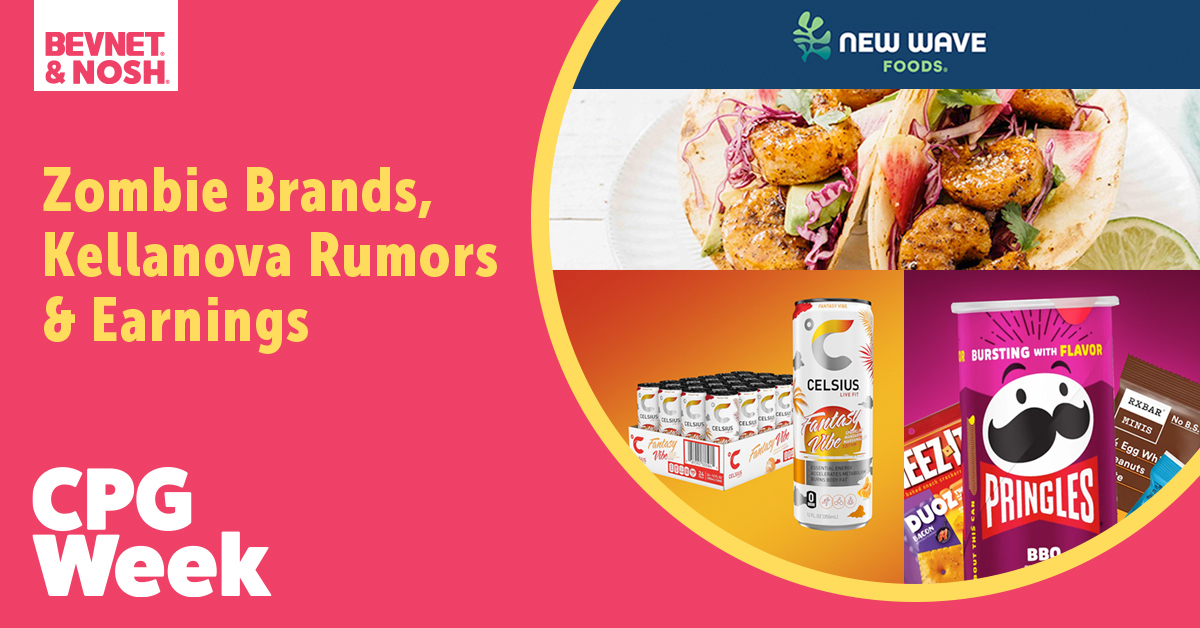
| | 🎙️ Now Streaming: CPG Week | | | This week the CPG Week podcast team shared their favorite discontinued products before jumping into a packed episode ranging from “zombie brands,” a rumored mega-merger of snacks and sweets, earnings results and PRIME’s ongoing legal woes.
- The team dives into a discussion of zombie brands and how it relates to alternative meats, the pandemic and… Steven Seagal movies?
- The group also talked through the rumored acquisition of Kellanova brands by Mars and what it could mean for the snacks and sweets sectors
- The show closes with a review of some of the latest beverage industry earnings and a rundown of yet another lawsuit against Logan Paul’s PRIME beverage company.
Listen to the full episode on Nosh. Like what you are listening to? Please don’t hesitate to rate our show and leave a review on your podcast platform of choice. |
|
| Your BevNET CPG Media Subscriptions You're currently subscribed to newsletters from BevNET CPG Media. To change which newsletters you receive, update your preferences - don't miss out on topics you care about. | |
| |
|
| | | |
|