| | | | | | In today’s issue | 🍸 New RTD Cocktails • ↘️ BRĒZ Drops Prices • 🌵 Are Californians Over Tequila? • 📊 Jones Cuts Losses, Sales Still Slow • ♻️ Starbucks Green New Cups • 🔀 Monday Moves |
| 📰 Today's Top Story | | | If the explosion of the cannabis drink market can be encapsulated in a single idea, it’s the story of a market – for better or worse – that’s outpaced (and outfoxed) regulators at nearly every turn. But those days could be dwindling. That’s because, with still no action at the federal level, states have busied themselves with trying to wrangle the runaway category and align its complex entanglement of safety and commercial concerns, with potential significant impacts on alcohol. Here’s what we're watching: Minnesota has served as a national example of competent state-level cannabis policy, with beverage makers being one of the biggest winners. Gov. Tim Walz is expected to sign an omnibus bill soon that would, among other things, allow vendors to sample products at cannabis events, allow local manufacturers to export low-potency hemp products out-of-state, and also restrict one-serving beverages to no more than 10mg THC. Meanwhile, Delaware may be close to integrating THC-infused drinks into the three-tier system for beverage alcohol – great news for alcohol trade groups that are advocating to co-opt distribution of hemp-based products, but bad news (in the short-term, at least) for bars and restaurants. The bill’s sponsor, Rep. Debra Heffernan, has framed the issue as a public safety concern, citing a lack of guidelines on how to safely sell and serve THC-infused drinks in on-premise venues. In Rhode Island, hemp-derived THC products are already available via around 140 licensed retailers and 11 distributors, but a new bill proposes to allow wholesalers to sell to liquor stores, bars and restaurants for an increased annual fee of $1,500 (up from $500 currently). Bars and restaurants could do the same for $250 per year. That hasn’t gone down well with the state’s cannabis dispensaries, who pay $30,000 annually for their licenses. While the details change, the overarching message remains the same: after the opening of a sprawling frontier, all parties are eager to see some type of order installed, but your perspective on what that order may depend on when you entered the game. For alcohol vendors, including bars and restaurants, there’s acknowledgment that they can’t afford to miss out on the THC boom – even bar guru Jon Taffer is sounding the alarm. But for brands and entrepreneurs that have navigated the grey area and carved out a piece of the cannabis market, there’s concern that hard-fought gains could be quickly erased. Go Deeper: THC Drinks Crush it Online – But For How Long? |
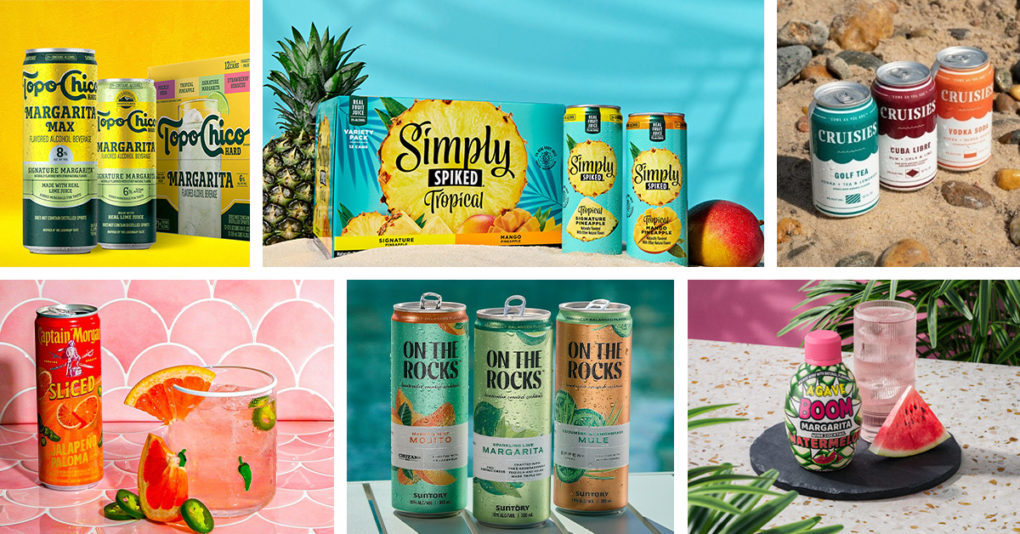
| | | 👉🏼 What You Need to Know 👈🏼 | | | We are starting off the week with a heavy pour the latest roundup of spring RTD releases including tropical refreshes from Coca-Cola’s Topo Chico and Simply Spiked and more flavors from south of the border. Here’s a sample: 🇲🇽 The next flavor from Mexican boxing legend Saúl “El Canelo” Álvarez’s VMC has stepped into the ring. Tamarindo was inspired by aguas frescas and the sweet and spicy flavors of Mexican candy. 🪨 On the Rocks is going from ready-to-pour to ready-to-drink. The Suntory-backed premixed cocktail specialists have released three sparkling varieties including Sparkling Lime Margarita, Mango & Mint Mojito, and Cucumber & Lemongrass Mule in 355 mL cans. 🍸 With vodka-spiked lemonades picking up steam, Spirit of Gallo (the maker of High Noon) is joining the crowd with the launch of Lucky One Vodka Lemonade. Check out more of the newest RTDs on shelves. |
| | | Successful sales often lead to scale. Hemp-derived THC brand BRĒZ is paying that consumer led support forward in its pricing strategy, dropping the cost of its three THC RTD varieties between 25% and 30%. 🛒 BRĒZ also launched a “Build A Bundle” tool to encourage consumers to increase basket sizes by purchasing across formats. 🌱The brand recently leaned deeper into category norms, expanding from cans into shots and adding a multi-serve “spirit” format, along with its “extra strength” 10mg RTD. 🏪 Brez is now available in over 2,400 retail doors (between its non-psychoactive variety and its intoxicating hemp drinks) including an upcoming 450 store launch at Sprouts next month. Go Deeper: Can THC Brands Find Safety in Three-Tier System? |
| | | A new report indicates that Californians’ thirst for spirits has declined, fueled by a drop in core tequila volumes, such as blanco and gold. 🍊 Known as a major market and a trendsetter for agave spirits, Californians are instead going after niche styles, including cristalino and flavoured tequilas, which are holding steady or outpacing the rest of the country’s growth trends. 📊 Overall, the report from market research firm IWSR shows that the evolution of wine, beer and ready-to-drink consumption in California broadly followed national trends between 2019 and 2024, but spirits volumes fell by 9%, compared to a 3% dip across the country. 💭 So what are Californians drinking? Adult-non alc (ANA) and low-alc volumes are disproportionately strong, and higher-priced beer, wine and spirits are still proving resilient with ready-to-drink (RTD) booming. Understand all of the key data points in the full story on BevNET. |
| | | Jones Soda may have more drinks on shelves, but they’re still looking for sales as the Seattle-based brand saw revenue slip to $4.6 million in Q1 2024 (from $5 million last year) amidst its latest attempt at a strategic turnaround. - CEO Scott Harvey, who joined the company in February, optimistically characterized it as “a good start.”
💡 Harvey noted a healthy pipeline of innovation in soda (Jones Zero Cola, prebiotic Pop Jones and Fiesta Jones) and adult beverage (Spiked Jones and THC-infused Mary Jones), and delivery on his mandate to increase efficiencies and reduce costs was reflected in lower total operational expenses in Q1, $2.4 million compared to $3 million in the year-ago period. Read the full story on BevNET. |
| | | Starbucks is getting greener. The coffee chain is rolling out home-compostable cups at locations across Europe, Middle East and Africa that are free from the standard plastic liner found in most takeout coffee shops. - The new cups use a mineral coating to still protect the paper from hot liquids and the plastic lids are being swapped for fibre-based alternatives.
- The cups were designed in partnership with climate consultancy group South Pole and Transcend Packaging, Metsa Group and Qarzo.
- No word on if or when the better-for-the-planet cups will come to North America but the move is a big vote of confidence for compostable packaging.
|
| | 🔀 Monday Moves | | Here’s a taste of the people and products moving around the industry to start off your week. 🍵 Sparkling tea brand Juni is now available in Sprouts Farmers Market stores. The natural retailer is carrying the adaptogenic brand’s Decaf line, the company said, a unique product line for the still-small sparkling tea set. 🧘 Stress relief drink Zenjoy is now sold in Giant Eagle and Market District locations in Pennsylvania and Ohio. It’s also the first time the canned tea brand is distributing via KeHE. 💦 The Alkaline Water Company has added Woodman’s Market stores in the Midwest, giving the brand additional footprint in Wisconsin and the greater Chicago area. 🦎 SYSTM Foods, which owns REBBL, Chameleon Organic Coffee and Humm Kombucha, has named Elizabeth Stephenson as CEO. She joins the company from Intelligent Brands and has previously held executive positions at The Wonderful Co. ⚡ TRU VP of national sales Sean McDonough departed the company, per a LinkedIn post, after more than four years helping to build the functional drink brand’s distribution footprint. McDonough did not specify his next move. |
| | |
Have feedback or a tip to share? Let me know at adeluca@bevnet.com.
That's all for today's Daily Briefing. We'll be back in your inbox tomorrow. |
|
| Your BevNET CPG Media Subscriptions You're currently subscribed to newsletters from BevNET CPG Media. To change which newsletters you receive, update your preferences - don't miss out on topics you care about. | |
| |
|
| | | |
|