| | | | | In this issue of Daily Briefing | - 👹 Monster Sees Muted Q2 Sales Growth
- 🤿 Data Dive: It’s Been A Cold July
- 🌊 Laird Q2 Continues Rebound Trend
- 📉 Zevia: Q2 Results Show Declines
|
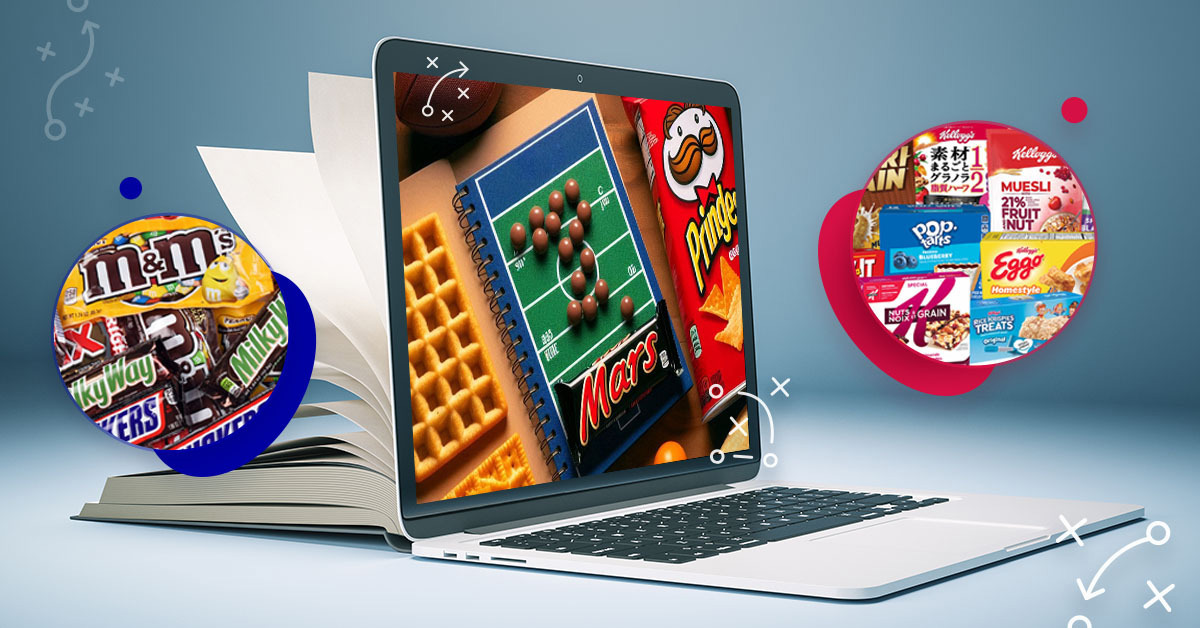
| 📰 Today's Top Story | | | For a summer without a whole lot of financial news, the rumored buyout of snacking giant Kellanova by legacy candy maker Mars hit like Hurricane Debbie. The potential for a company with an estimated combined revenue of $60 billion, after all, carries a lot of crosswinds.
And while everyone loves a big merger, at the entrepreneurial level, it’s often hard to parse out how it might change the stakes. Especially as corporate VC plays have dropped precipitously, leaving early stage entrepreneurial brands to work with institutional investors, most of the moving parts in these two players are old and slow: Kellanova is a stable of older, bakery-based warhorses, including Pringles, Cheez-Its, Pop-Tarts and Nutrigrain bars; only RxBar, purchased (and, many say, fumbled) in 2017, is of recent vintage. Comparatively, privately held Mars – home of M&Ms, Snickers, and lots of other tasty candy – has bought a few smaller brands, but it has largely stuck to the sweet stuff, buying a few PE-backed fast-growth brands, like Nature’s Bakery and Tru Fru, along with its majority stake in the better established KIND. Still, a big deal would certainly have repercussions – the tie-up of Dr Pepper Snapple Group and Keurig Green Mountain in 2018, for example, continues to reverberate from the perspective of partnerships with growth brands – it’s just a matter of time. So what should you watch out for as the owner of one of those brands? We checked with experts around food and beverage to understand some of the things that smaller brands should clock into when the whales start their mating dance. In terms of opportunity: - Distribution may open up, according to Kaumil Gajrawala, a longtime beverage industry analyst with Jefferies. “Let’s say the purchaser wants to put the target company into their distribution,” Gajrawala said. “So for anything lost, there’s a void that needs to be filled.” Example? Look at the Bang deal with PepsiCo, which allowed Celsius to move into the beer distribution network that Bang largely abandoned (and then look at the brands that moved into those same beer distributors when Celsius ultimately moved in to replace Bang at PepsiCo).
- In those places where smaller brands compete with the bigger ones, there’s the potential to take advantage of the fog of integration that tends to accompany these deals for about a year to 18 months, says Tony Rhie, a partner in Alliance Consulting Group, who works with corporate CPG firms on strategy and growth. According to Rhie, it’s a good time to focus on servicing your key accounts with a ‘small shop, better service,’ kind of approach. The two big companies need to combine everything from billing software to procurement – let alone the dreaded “strategic review.” That means there are often tactical opportunities, especially in incubation retail channels like natural and even mainstream grocery: “Even if I was going into Walmart,” Rhie said, “If the company I was with was working with Walmart, I might say, ‘there’s a good opportunity they’re going to lose their eye on the ball - we’re here for that.’”
- Your category may heat up – if the acquired company decision validates it. So for a Kellanova takeover, look at snacks as a potential area where investment might increase down the line. It could be a datapoint for a presentation, if nothing else.
- Don’t underestimate the ability of big companies to screw up their acquisitions. “Sooner or later, they start trying to ‘fix’ things,” which often has negative results, cracks Rifle Hughes, co-founder of Integral CPG, an innovation consulting firm.
- Lean in on your own innovation, and don’t be afraid to present something new, Rhie notes: when companies are combining, innovation budgets often get cut.
Insiders can access the full story to learn what challenges experts say the deal could produce and glean more insights from Gajrawala and additional industry experts. Also check out this week’s episode of CPG Week for some casual conversation about the merger’s potential implications. |
| | | | Sponsored message from NP Nutra | | Introducing our NEW organic Veggie Fusion™ Blend! Providing vitamins, minerals, amino acids, fiber and phytonutrients, it’s perfect for RTD and RTM better-for-you beverages. Visit us at SSW booth 3237 to learn more. Schedule a meeting by emailing us at sales@NPnutra.com
Learn more
|
| 👉🏼 What You Need to Know 👈🏼 | | | Monster Beverage Corp. co-CEO Rodney Sacks cited an “actually relatively unprecedented” downturn in consumer spending and c-store traffic as the cause of anemic sales growth in the company’s latest earnings report, released this morning.
⚡ Hilton Schlosberg, vice chairman and co-CEO, admitted during prepared remarks that energy drinks “experienced lower growth rates” in Q2 as consumers have turned away from c-stores in search of higher-value channels like mass and dollar. Let’s take a closer look: - Net sales increased 2.5%, to $1.9 billion.
- Within its RTD Energy Drinks segment – its core Monster line, plus Reign Total Body Fuel, Reign Storm, Bang Energy and Monster Tour Water – rose +3.3% from the same period last year to $1.74 billion.
- Attempts to innovate are also bringing growing pains: Thanks to decreasing FMB volumes, net sales in Monster’s Alcohol Brands segment – which includes The Beast Unleashed, Nasty Beast Hard Tea, and various craft beers and hard seltzers – were down -31.9% to $41.6 million, from $61 million in Q2 2023.
- The company reported a write-down of around $8.1 million related to brewery closures in the quarter.
BevNET Insiders can read the full story to learn why the company isn’t backing off from its planned 5% price hike this November. |
| | | | Connect with industry pros and the BevNET team, ask questions, stay updated on events, participate in expert Q&As, and enjoy exclusive giveaways! It’s a great way to network, learn, and stay engaged with the community. Join for free at slack.bevnet.com. |
| | | Talk about a summer cool-off: Non-alcoholic beverage sales growth decelerated as slightly stronger pricing growth was more than offset by weaker volumes in the two-week period ending July 27, according to Goldman Sachs Equity Research’s latest analysis of NielsenIQ retail scanner data.
- Average pricing picked up speed in the two-week period (+2% versus +1% in the 4-week period) while volume sales growth was down 2.9%.
- Overall dollar sales fell 0.8% in the two-week period, down from +1.5% in the four-week period and +2.6% in the 12-week period.
These numbers may cause more hand-wringing from the big energy drink brands: Monster (see earnings above) and Red Bull each reported falling volume, and Celsius’ rocket-like trajectory has begun to taper off (though +15% ain’t too bad, either). - Overall category volume is off, but as we reported in last month’s issue of the magazine, category dynamics have opened door for brands like Nutrabolt’s C4, GHOST and Alani Nu – all of which have built credentials in fitness and nutrition channels with powdered products, mind you – to keep picking up ground.
As Ryan Reynolds’ latest Deadpool flick reigns at the box office, Danone’s Stok Coffee – an official sponsor of Reynolds-owned soccer team Wrexham FC – is putting up similar numbers within a depressed liquid coffee category. - The data makes for some bleak reading: Volumes for big guys like Pepsi/Starbucks (-11.2% in the four-weeks) Coca-Cola (-2.6%) and once-hot brands like Black Rifle (-5%) and Super Coffee (-34.4%) are off.
- That only makes Stok’s steady pace – +9.4% in the four-weeks, +7% for the 52-weeks – a touch of sweetness in an otherwise bitter brew.
BevNET Insiders can access the complete data recap here. |
| | | Laird Superfood has been on the road to recovery for a few years and it seems to be nearing a positive destination. Laird CEO Jason Vieth announced “tremendous progress” on the company’s Q2 call yesterday, which builds on two past consecutive quarters of positive progress. Here are the top line numbers:
- Net sales of $10 million with ecommerce sales up 47% year-over-year
- Gross margin was 41.8% compared to 24.3% in the prior year period.
- Net loss fell to -$1.3 million, versus -$7.7 million in Q2 2023.
- The 2024 full-year net sales outlook is expected to range between $40 million to $44 million while gross margin is anticipated to be between 40% and 41%.
Vieth confidently kicked off prepared statements by stating that the “Laird Superfood growth story has once again put up results that should be the envy of the industry.” Insiders can read the full report.
|
| | | Zero-sugar soda brand Zevia continues to contend with slow growth as the company focuses on its new productivity initiative, its direct-store delivery partnerships and renewed marketing investments, said CEO and president Amy Taylor in prepared remarks. The better-for-you soft drink maker reported softer topline growth as it lost distribution in the club channel and continues to face SKU recovery with retail partners. Let’s look at the results:
- Net sales of $40.4 million, a 4.3% decrease compared to Q2 2023.
- Gross profit margin was 41.9% declining 4.7 percentage points year-over-year
- Net loss was $7.0 million, a $2 million decline versus the prior year period.
- Adjusted EBITDA loss was $4.4 million
Taylor teased that there was “exciting new retail distribution news coming” that Zevia leadership believes will increase visibility and drive trial among new consumers. |
| | 🎙️ Now Streaming: CPG Week | | | This week the CPG Week podcast team shared their favorite discontinued products before jumping into a packed episode ranging from “zombie brands,” a rumored mega-merger of snacks and sweets, earnings results and PRIME’s ongoing legal woes.
- The team dives into a discussion of zombie brands and how it relates to alternative meats, the pandemic and… Steven Seagal movies?
- The group also talked through the rumored acquisition of Kellanova brands by Mars and what it could mean for the snacks and sweets sectors
- The show closes with a review of some of the latest beverage industry earnings and a rundown of yet another lawsuit against Logan Paul’s PRIME beverage company.
Listen to the full episode on Nosh. Like what you are listening to? Please don’t hesitate to rate our show and leave a review on your podcast platform of choice. |
|
| Your BevNET CPG Media Subscriptions You're currently subscribed to newsletters from BevNET CPG Media. To change which newsletters you receive, update your preferences - don't miss out on topics you care about. | |
| |
|
| | | |
|