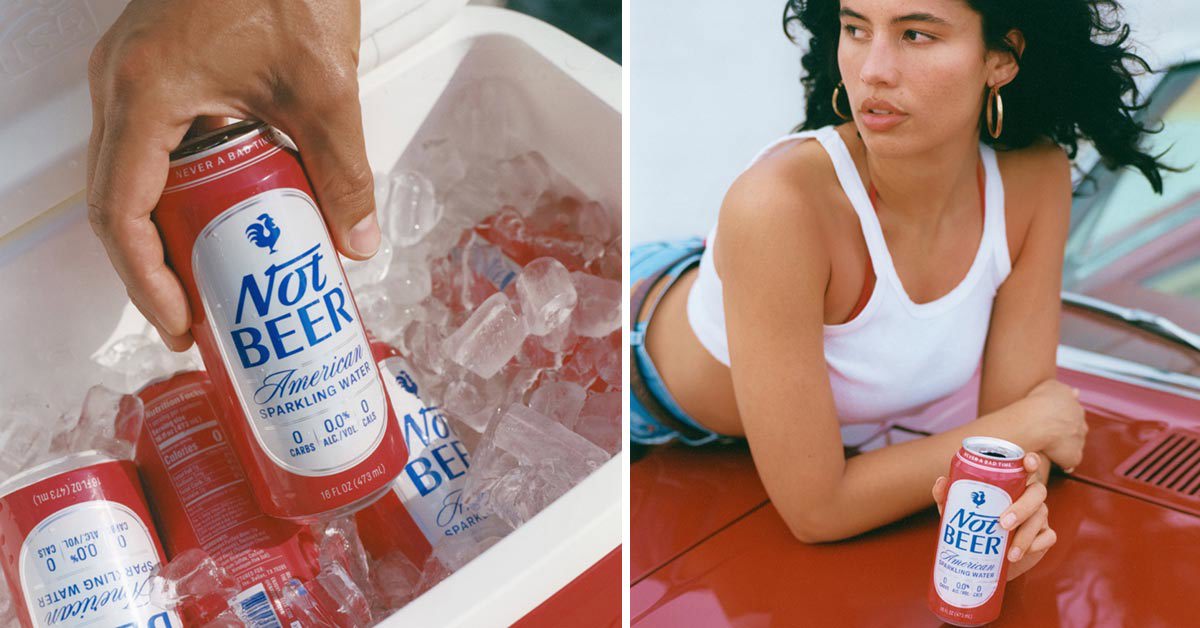
| | | | |  | In this issue of Daily Briefing | - 🙅♂️ This Water is ‘Not Beer’
- 🍸 The Atlantic Examines Non-Alc Age Debate
- 🍻 Non-Alc Gaining Sip Share, BevAlc Loses Displays
- 🆕 New RTD Cocktails From Betty Booze & More
- 🍸 Boisson Update: Wholesale Holds Strong
|
| | | Sponsored message from Synergy | Consumers want more from energy drinks—hydration, focus, mood enhancement and muscle support. Manufacturers are responding with functional ingredients like ashwagandha, BCAAs, and natural caffeine to meet the growing demand for healthier options.
Learn more
|
| 👉🏼 What You Need to Know 👈🏼 | | | Let’s be honest: Liquid Death’s runaway, against-the-grain success hasn’t really been about water. Or at least that’s the general theory being tested, in a sense, by entrepreneur and Brami co-founder Dillon Dandurand’s new canned water brand, Not Beer. By putting non-alcoholic sparkling water in a can designed after a popular domestic beer – which, mind you, this is not – Dandurand is hoping to prove that alcohol marketing can work for an everyday-anytime drink, in the most direct way possible. 💧 As Liquid Death has shown, canned waters are particularly effective in engaging and including non-alc drinkers in venues where alcohol traditionally dominates, like concerts and events. Not Beer’s marketing approach leans into that inclusivity, though with a less aggressive tone; “Never a bad time” is the tagline. 📈 You may be asking, why describe water as “not beer?” Well, statistics, for one: according to a recent survey from NCSolutions, over one-third of Gen Z consumers (34%) say they’re more likely to try a new beverage if it’s aligned with the sober curious lifestyle, compared to 17% of all Americans. 💧 Not Beer’s take (or non-take?) on water may help distinguish the brand within a growing field of canned waters jockeying for a position as ‘adult non-alcoholic’ options, including Monster’s Tour Water, White Claw’s sparkling line and, of course, Liquid Death. Read the full story on BevNET. |
| | | As next-gen non-alcoholic drinks find their place in the market, the discourse has rarely stopped to explore how the category fits into consumption habits of minors. Is all non-alc just non-alc? Or should a zero-proof gin be off-limits to the under-21 crowd? Haley Weiss dove into the debate in a recent story for The Atlantic.
🛒 The decision on who should be able to buy ‘adult non-alcoholic’ drinks often comes down to the individual retailer, Weiss noted. Lafayette, Indiana, bottle shop Generation NA, for example, has different policies for “wellness sodas” like Recess and Kin (18+ OK) and NA beers, wines and spirits (21+ only). Meanwhile, state regulations can create confusion in inadequately distinguishing alcoholic beverage processes from their NA counterparts. 🧒 Rather than finding a specific age, the underlying conversation is how and when young people should be introduced to alcohol and the push-pull effect that non-alcoholic analogues may have in either steering individuals towards or away from the real thing. 🤔 Even NA industry advocates struggle with that question: speaking with Weiss, Daryl Collins of Baltimore zero-proof bottle shop Hopscotch “struggled to describe what he would or wouldn’t let” his 9 year-old daughter drink. Talk about growing up fast… |
| | | Fewer grocery store displays in BevAlc, notably in premixed cocktails, beer and cider, should be considered a warning sign for suppliers, according to a new annual report from Circana that highlighted some trends driving the industry.
- Surprise: most trends revolve around Gen Z’s thirst for variety, interesting and convenient packaging, high ABV and “fun flavors.”
- Overall, decreases in grocery store displays for BevAlc echo how consumers are changing their “share of sip,” with carbonated soft drinks, water, and sports/energy drinks gaining share in multi-outlet plus convenience channels.
The report recommended that suppliers should extend the flavor and attribute preferences in non-alcoholic drinks from Gen Z — desire for energy, sweetness, intense flavor, and “for me for now” sizes— to BevAlc. Read the full story on BevNET.
|
| | | | Sponsored message from Cognizin | | Cognizin® Citicoline is a leading cognitive health ingredient that helps maintain focus, attention, and memory. It delivers a patented form of citicoline to supply your brain with an important nutrient to help you stay sharp. Give your customers the best ingredient for brain health with Cognizin.
Learn more
|
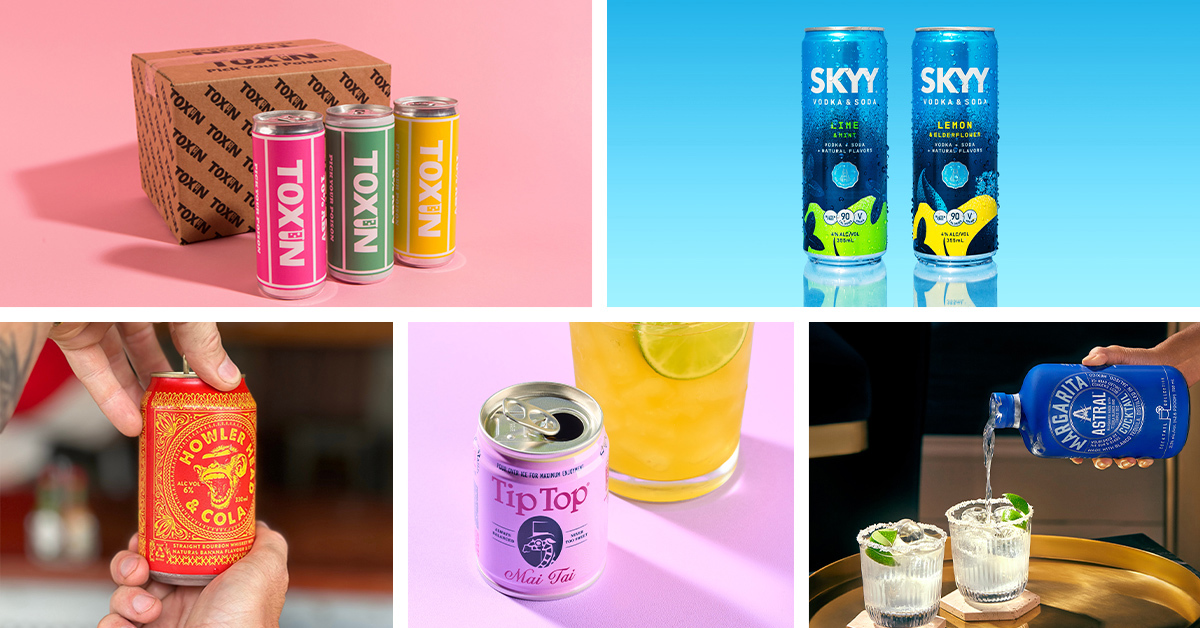
| | | It may only be Wednesday, but we’ve got a bonus new products gallery for you dedicated to the latest ready-to-drink cocktails. Here’s a sneak peek at what’s inside: 🍸 Diageo announced the release of the sixth offering in its ready-to-serve cocktail line, Astral Margarita. The new drink combines Blanco tequila, lime and triple sec and features tasting notes of agave and tangerine with a vanilla finish. 🍋 Betty Booze, the low-ABV sparkling canned cocktail brand founded by actress Blake Lively, expands its portfolio with two new varieties: Oak Smoked Lemonade and Sparkling Tequila with Smoky Pineapple. 🍹 New brand The Original Southside seeks to revive the classic 1920s Southside cocktail with a blend of premium gin, lemon and mint for a new generation of cocktail enthusiasts. Made in the United States, The Original Southside has 10% ABV and contains 100% sugar cane. Check out the full gallery on BevNET. |
| | | Despite adult non-alc retailer Boisson restructuring under chapter 11 bankruptcy protection, members of the team are making it clear the wholesale operation is still going. 📦 Jill Sites, vice president of wholesale, said that the company is “still selling people's NA products, we're still selling to NYC accounts, still selling to KeHe, still selling through LibDib, and our suppliers are still valuable members of the NA community,” via a post on LinkedIn. 📝 Per court documents, the company’s largest creditors include several NA brands such as French Bloom, The Pathfinder, Almave, Three Spirit Drinks, as well as NA retailer The Zero Proof. 🔀 After confirming last week that the company has closed its retail stores, Boisson has now shifted focus to its wholesale and e-commerce operations. The business as it existed was no longer financially viable, said CEO Sheetal Aiyer, who faulted the company’s fixed costs given its retail footprint and bi-coastal operations. 🚚 The hope, according to Aiyer, is that Boisson will emerge from the Chapter 11 process much leaner, with a streamlined focus on e-commerce and distribution. |
|
| Your BevNET CPG Media Subscriptions You're currently subscribed to newsletters from BevNET CPG Media. To change which newsletters you receive, update your preferences - don't miss out on topics you care about. | |
| |
|
| | | |
|