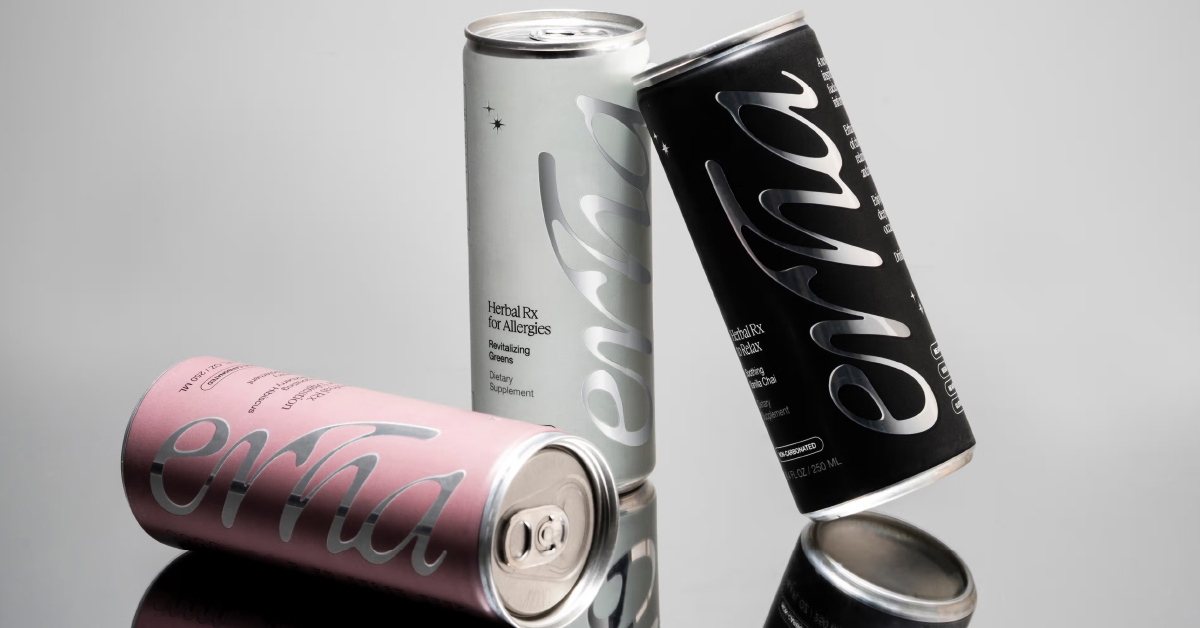
There’s a drink for every need-state these days. From Gillian Anderson’s libido-boosting G Spot to drinkable sunscreen, the functional drink set is catering to every ailment and value proposition. So, it might not be surprising that Erha, one of the newest category entrants, is claiming it can help allergy sufferers with seasonal histamine reactions. - The brand launched this week with three, non-carbonated varieties – Relax, Digestion and Allergy Support – all offered in 8.4 oz. cans.
- Erha is currently sold as a subscription (not prescription) product DTC as well as in Erewhon and at the over 450 Sprouts Farmers Market locations nationwide for $4.99 each.
The “Herbal Rx” Allergy Support variety claims to be an “industry-first wellness RTD,” using quercetin and nettle to suppress histamine responses in the body and reduce inflammation, said a brand spokesperson. For over 20 years, Erha’s founder Brooke Blashill has worked as a marketing executive for various beauty, wellness and luxury goods companies like LVMH, Gucci and Unilever. Bashill suffered from severe environmental allergies for years and decided to try to develop a wellness solution to address her struggles. Yet, when consumers are faced with a wall of functional drinks at the grocery cold case, do these niche options make an impact? An argument could be made for taking a nuanced approach to an established category. Whether it's a snake venom-infused energy drink like Fang or a KetoneAid’s zag into multiple sets including adult non-alc and recovery, bringing a differentiated ingredient to a surging and broad-reaching category is one way to carve out a new corner. Other segments of functional beverage have seen similar approaches. Relaxation drinks using CBD, kava and even low-dose hemp-derived THC cropped up along with adaptogenic products using ingredients like L-theanine, ashwagandha and magnesium. Cognition enhancement has also experienced a bump with ketones and functional mushrooms claiming to offer new ways to support brain function. Even a brand like GOOD IDEA, founded in Sweden in 2016, is seeing a lift as consumers are thinking more about aiding metabolic function. The brand’s “scientifically backed” research tailored to lower post-meal blood sugar spikes is an obvious complement to GLP-1 drugs. What remains to be seen is whether the market is big enough for a health supplement option like Erha that addresses an individual and highly seasonal need. What do you think: is this innovation a disruptor or set to drop off? Send thoughts to lsouthard@bevnet.com. Go Deeper: Ketone RTDs Seek Place Within Emerging Functional Set |