| | | | | | In today’s issue | 🆕 This Week’s New Products • 💪 Inside Clio’s Singles Strategy • ⭐ Reviews? We Got ‘Em • 💰 Kroger's $1 billion Bill • 😣 TreeHouse Cuts 150 Jobs • 🚂 The M&A Train Keeps Rolling. And, How 'Jovi's Hampton Water Got Hot. |
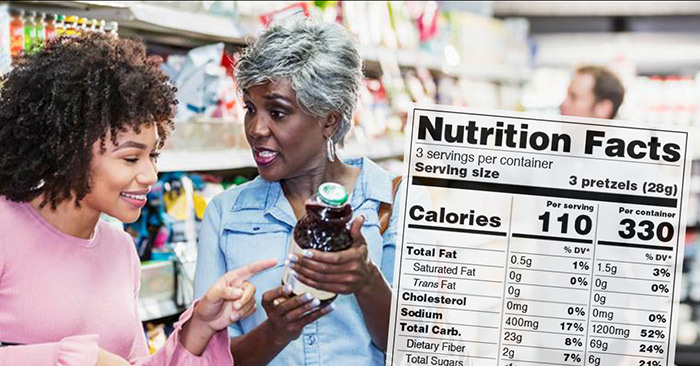
| 💭 Today’s Big Take | | | Nutrition is a hot topic these days as the Make America Healthy Again crowd spreads its message across the country. So it is important that, after years of discussion and controversy, the U.S. Food and Drug Association (FDA) is now talking through its finalized definition for the term “healthy.” - That final guidance was issued on Dec. 25 and developed in the pre-MAHA era under the Biden Administration.
- The finalized rule for food and beverage packaging is set to go into effect on April 28.
The updated criteria aligns the term’s regulatory definition with current nutritional science and federal dietary guidance. The goal is to promote healthier dietary patterns to reduce chronic diseases. Here’s the skinny on what foods now qualify as “healthy”: - Products must contain a “certain meaningful amount” of food from at least one nutrient-dense food group or subgroup (fruit, vegetables, grains, fat-free and low-fat dairy and protein) recommended by the Dietary Guidelines for Americans (DGA) AND
- Meet specific limits for added sugars, saturated fat and sodium based on the percent of the daily value (DV) recommended for each individual nutrient
Those parameters do overlap some with ongoing discussions around ultraprocessed foods (UPFs), which are also playing out at the federal and state level. Unlike “healthy” (whose definition was in discussion for over a decade), UPFs still lack their own spot in the FDA’s dictionary. We can look at what has happened with “healthy” to possibly predict the path to regulatory guardrails around UPFs too. As research continues, it can be expected that any UPF parameters will also evolve. In the case of healthy, several changes have been made since the agency first proposed the rule back in 2022. Public feedback also plays a role. For example: The FDA originally exempted raw whole fruits and vegetables. Those foods automatically qualify as “healthy” without having to meet food group equivalents (FGEs) and nutrient requirements. The final rule expands this exemption to single-ingredient foods (no additional ingredients other than water) across all food groups. - Examples include whole or sliced fruits, unsalted nuts, brown rice and frozen mixed vegetables.
- Water (including carbonated water), tea and coffee with less than five calories per serving and no added caffeine can also bear the claim without having to meet the requirements.
- The FDA also lowered dairy requirements so that more yogurt products can qualify as “healthy.”
- The final, updated rule also provides flexibility on the amount of inherent and naturally occurring fats in seafood, nuts, seeds and soy products so that these items can qualify.
Manufacturers have three years to comply with the final rule and can begin using the updated criteria on April 28, 2025. What do you think, readers – did the FDA get this right? Send your thoughts to sgolden@bevnet.com. Go Deeper: Check out our recent coverage on the race among regulators to restrict UPFs |
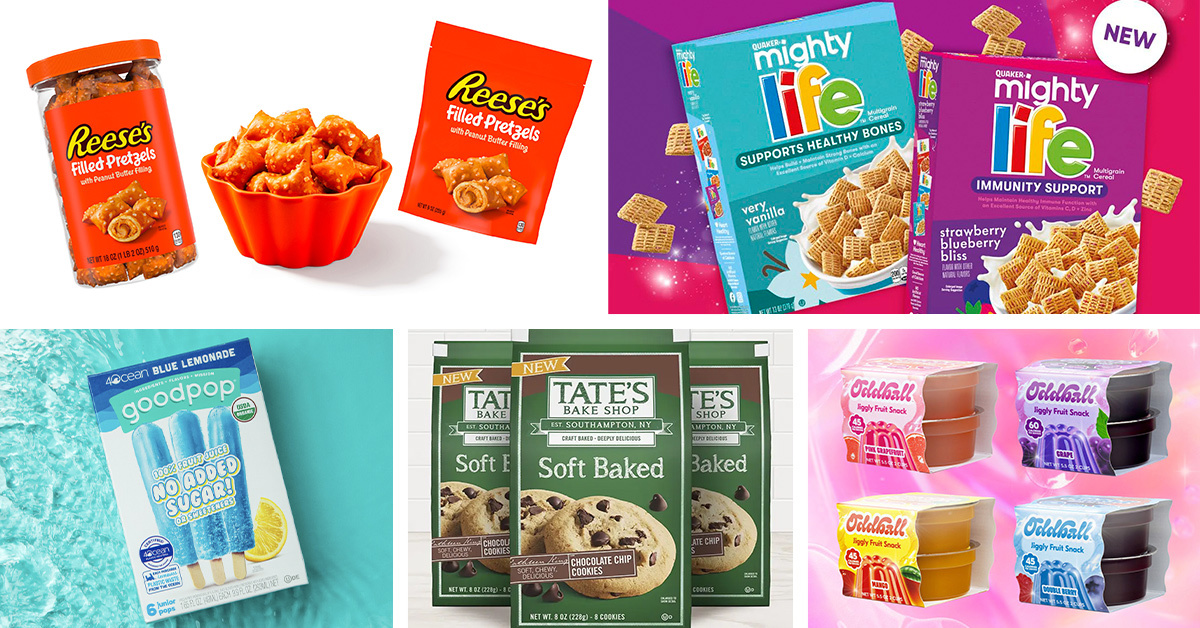
| | | ✨ What You Need to Know ✨ | | | Hot off the (virtual) presses, it's the latest edition of Nosh’s weekly New Products Gallery. Here’s a sneak peek at what’s inside: 🌊 GoodPop grew its partnership with 4ocean by launching Blue Lemonade Pops exclusively at Whole Foods Market. The frozen treats are made with real organic fruit juice and are free of added sugars and dyes. 🫐 Once Upon a Farm is celebrating the arrival of spring with two new seasonal products: Pear & Blueberry Baby Oatmeal Blend and Blueberry Buckle Fruit & Veggie Pouch. 🍨 Two Spoons launched what it claims to be the first high-protein ice cream with zero added sugar and GLP-1 compatibility in the frozen dairy section in four flavors – Rocky Road, Strawberries & Cream, Caramel Swirl and Fudgy Brownie. Each 14 oz. container contains 30 grams of protein. Check out the full gallery on Nosh. |
| | | The fresh set is growing in retail, and Clio Snacks aims to get in on the party. 2️⃣ The refrigerated Greek yogurt snack bar maker is set to double its business over the next 18 months thanks to a retooled product strategy that’s better aligned to grow velocities as it goes deep on an omnichannel approach that now spans 28,000 doors nationwide. 📦 About four years ago, Clio shifted from single unit sales to 4-packs in grocery to satisfy the dairy aisle, but preserved its individual format for foodservice and c-stores. Its away-from-home business is ramping up and expected to contribute 16% of the brand's sales by 2026. 🔊 “We ended up seeing that our unit takeaway was almost the same with the $5.99 ring, as it was with a $1.59 ring. It really saved us to a certain degree, all at the same time, getting the brand out there in a broader array,” CEO John McGuckin said. 🧱 Now Clio is working to build momentum behind the growing fresh snack set at retail (which saw sales rise 45.6% year-over-year in 2024, per Circana) believing it can add incremental value and create a new destination in store for consumers. Read how the brand is tackling the challenge in the full story on Nosh. |
| | | In this reviews roundup, we chow down on Little Sesame’s latest collaboration, a nostalgic spin on Reese’s Peanut Butter Cups, Mojave Mallows' organic treats and Alvarado St. Bakery's sprouted sourdough bread. We are sharing our takes on taste and texture, packaging and positioning and opportunities for improvement. 🆓 Check out this week’s review roundup on Nosh. Want your product reviewed? Send an email to mwatrous@nosh.com. |
| | | Kroger spent more than $1 billion during the three-year period it pursued a merger with grocery competitor Albertsons, per a recent SEC filing. - It racked up $684 million in merger-related expenses in 2024 alone, per a report in Mergers & Acquisitions.
- Those annual bills steadily ratcheted up, with $316 million spent in 2023 and $44 million in 2022.
- Now, the grocer faces the prospect of paying out a $600 million termination fee to Albertsons, alongside a $125 million fee to C&S Wholesales, who had agreed to buy divested stores to support the deal with regulators.
- Both Albertsons and C&S have sued Kroger for the fees, but Kroger argues neither acted in good faith and, thus, are not entitled to the payments.
Go Deeper: Listen to the CPG Week team dish out details on the Kroger/Albertsons break up. |
| | | Private label food and beverage maker TreeHouse Foods is eliminating about 150 roles at the company, including its EVP, business president and CCO Scott Tassani as part of “planned actions” to drive profitability. 🫖 The company acquired Harris Tea at the beginning of the year in a deal that added two new manufacturing facilities in Moorestown, N.J., and Marietta, Ga., along with 300 employees. 📉 The food and beverage maker reported a “challenging” FY2024 in February with CEO and president Steve Oakland saying he was “unsatisfied” with its Q4 and full-year results. 📊 TreeHouse reaffirmed its 2025 financial guidance on Thursday, with adjusted annual net sales between $3.34 billion to $3.4 billion and adjusted EBITDA between $345 million to $375 million. Go Deeper: Despite ‘Challenging” FY24, TreeHouse Optimistic On Private Label |
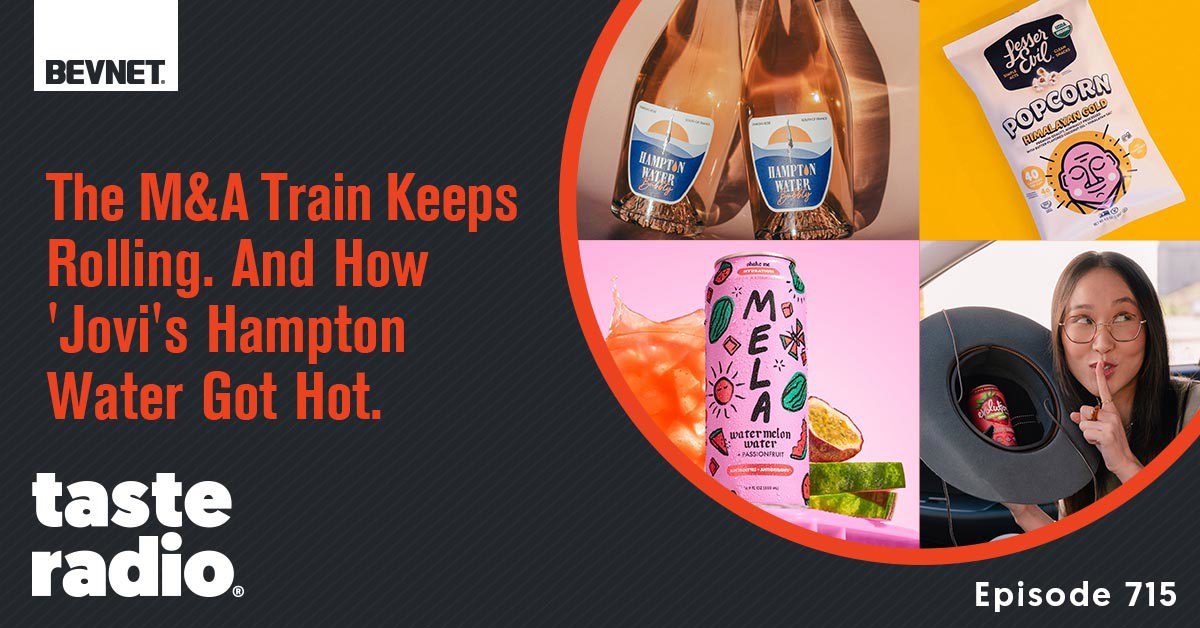
| | 🎙️ Now Streaming: Taste Radio | | | Is 2025 the year of the acquisition? The hosts highlight two more headline-grabbing deals announced over the past week: Hershey’s $750M purchase of BFY snack maker LesserEvil and the sale of watermelon water brand Mela to King Juice. We also speak with Jesse Bongiovi, who alongside rockstar father Jon Bon Jovi co-founded Hampton Water Wine, a rosé brand that’s taken the industry by storm. Listen to the episode now. Also available on Spotify and Apple Podcasts. |
| | |
That's all for today's Daily Briefing. We'll be back in your inbox on Monday. |
|
| Your BevNET CPG Media Subscriptions You're currently subscribed to newsletters from BevNET CPG Media. To change which newsletters you receive, update your preferences - don't miss out on topics you care about. | |
| |
|
| | | |
|